
Field Notes: Covering Bathroom Tile in Microcement Instead of Tearing It Out
We just handed back a master ensuite where nothing was demolished. Glazed beige floor tile, a tiled tub platform with decorative insert pieces, a bullnose trim edge: all of it is still in the room, sealed under a few millimetres of hand-troweled microcement. Here is what we looked at before saying yes, what the process actually involves, and what we would tell anyone thinking about doing the same.
The Room We Started With
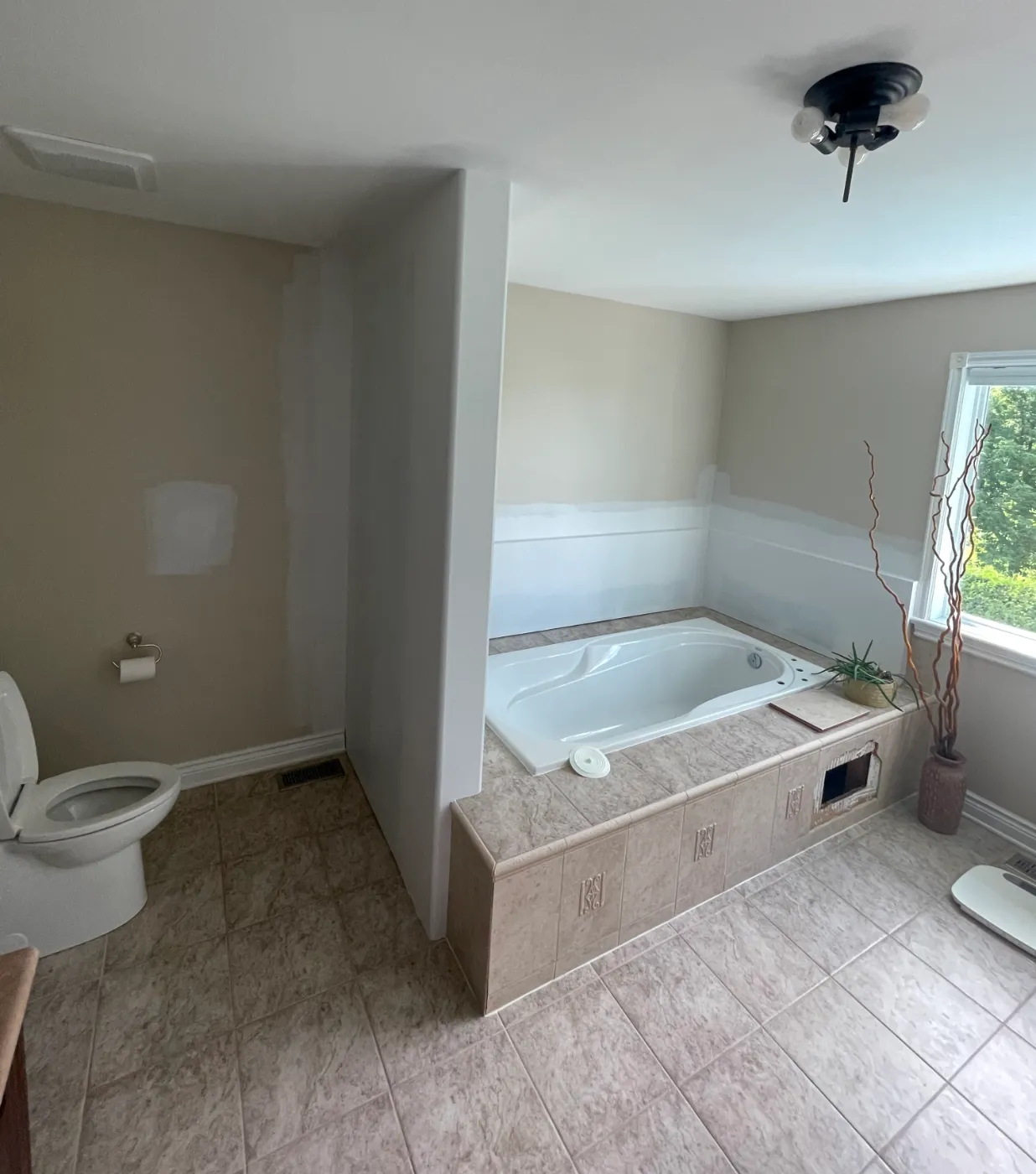
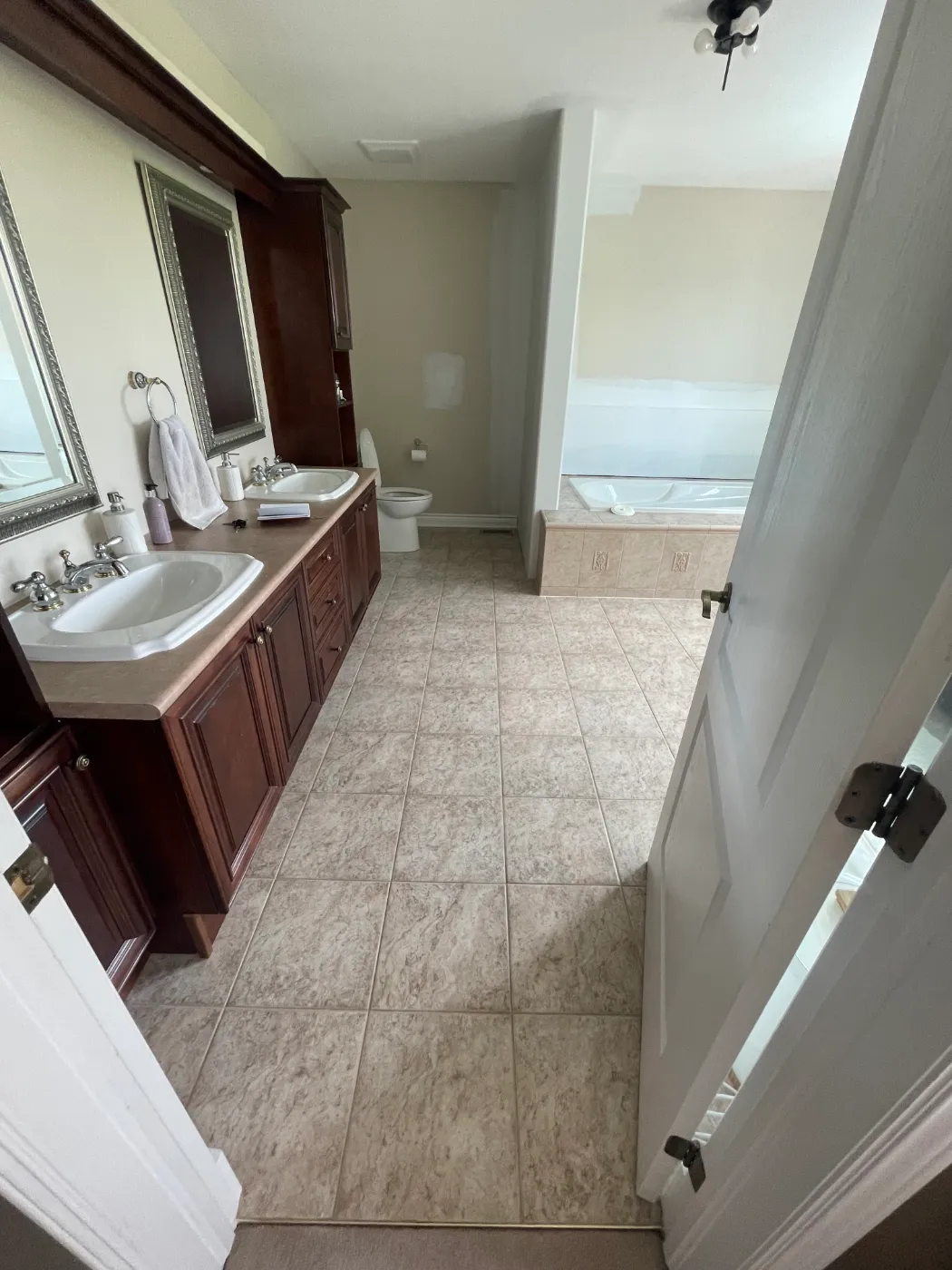
A generous ensuite from the era when every bathroom got the same mottled cream ceramic. The floor ran from the door to a drop-in soaker tub set in a tiled platform. The platform had a tile bullnose on its edge, a row of relief-pattern accent tiles on the front, and a plumbing access hole cut into the apron. The owners were putting in a new vanity with a dark stone top and wanted everything else in the room to stop competing with it.
Nothing was broken. The tile was flat and well bonded, and the tub was worth keeping. That combination is exactly when microcement over tile makes more sense than a gut job.
Five Checks Before We Agree to Go Over Tile
- Tap test. We sound out the floor. A hollow tile means a failed bond underneath, and a finish is only as good as what it sits on. Loose tiles are reset or cut out first.
- Movement. We walk the floor looking for deflection. A bouncy subfloor will crack any rigid finish, tile included.
- Moisture history. Any sign of a past leak around the tub or toilet gets investigated before we cover it up.
- Heights. Microcement adds only a few millimetres, but we still check the door swing, the tub lip and the toilet so nothing ends up proud or short.
- Edges and openings. Every place the finish has to stop, like the tub access opening and the doorway, gets a plan before the first coat.
This bathroom passed all five.
What the Process Looked Like
Most of the work is invisible in the photos. The tile was deep cleaned and degreased, then the grout joints were filled flush so the grid would not reappear as faint lines months later. A reinforcing mesh was embedded in the base coats across the floor and up the tub platform, which lets the new surface bridge the old joints.
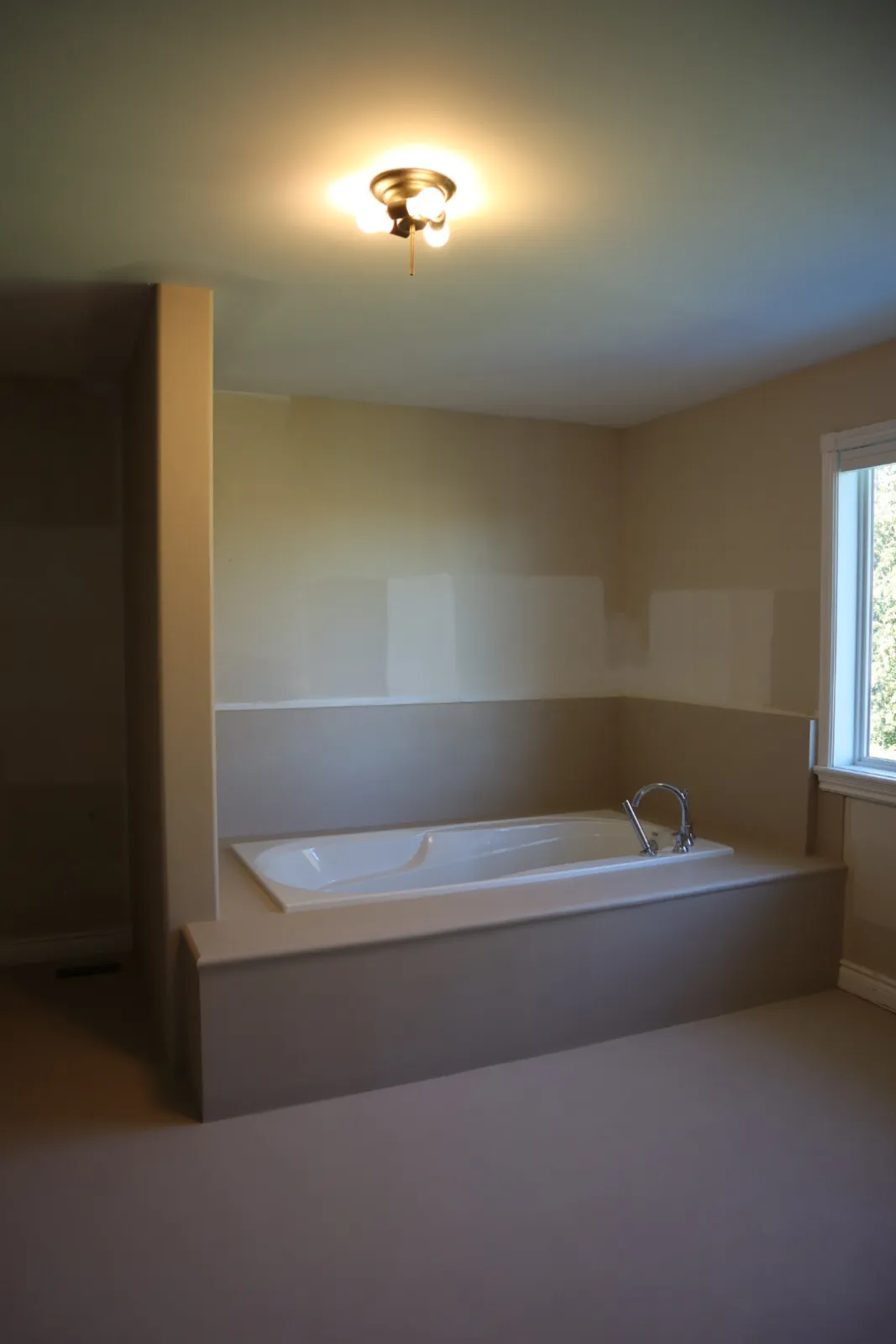
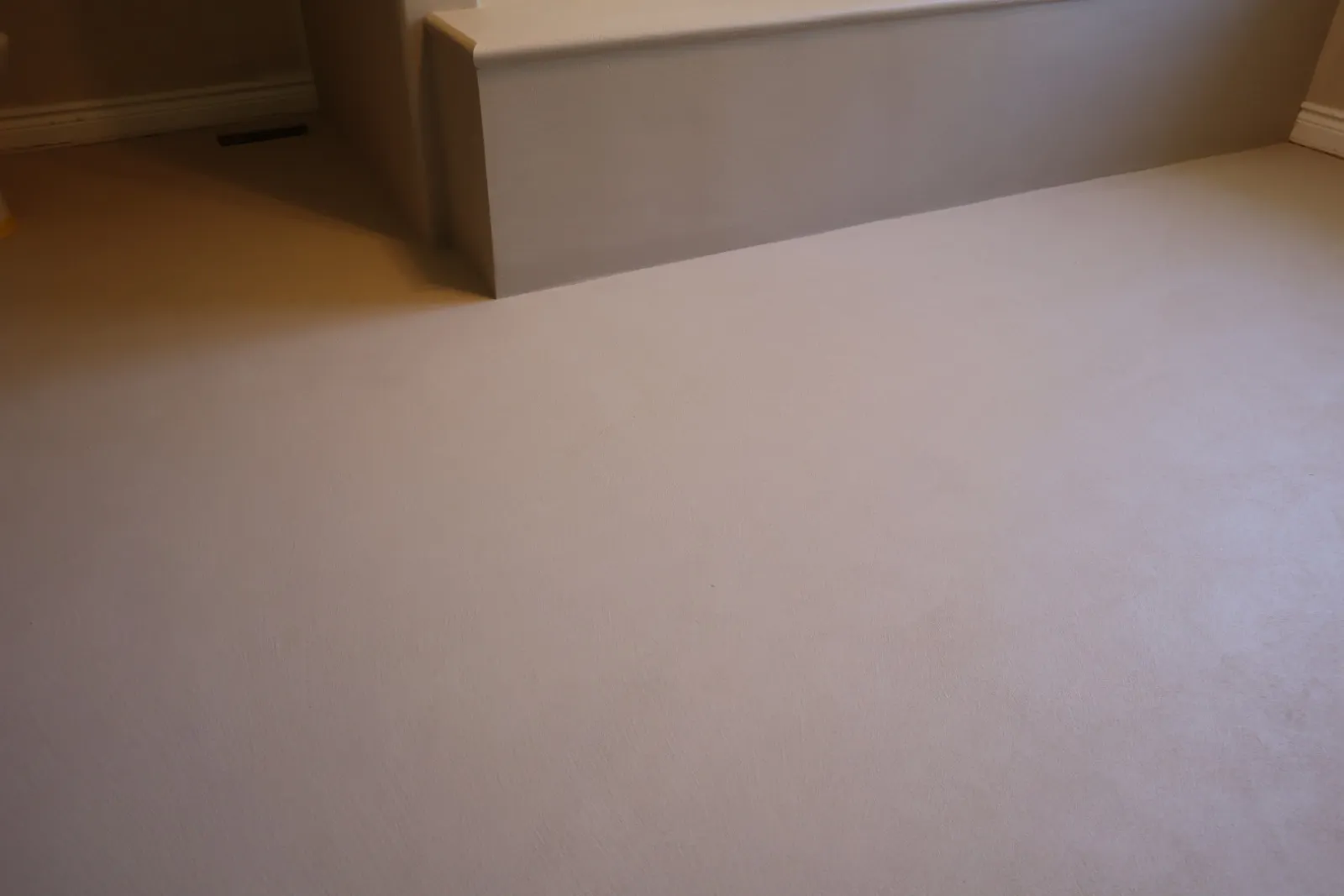
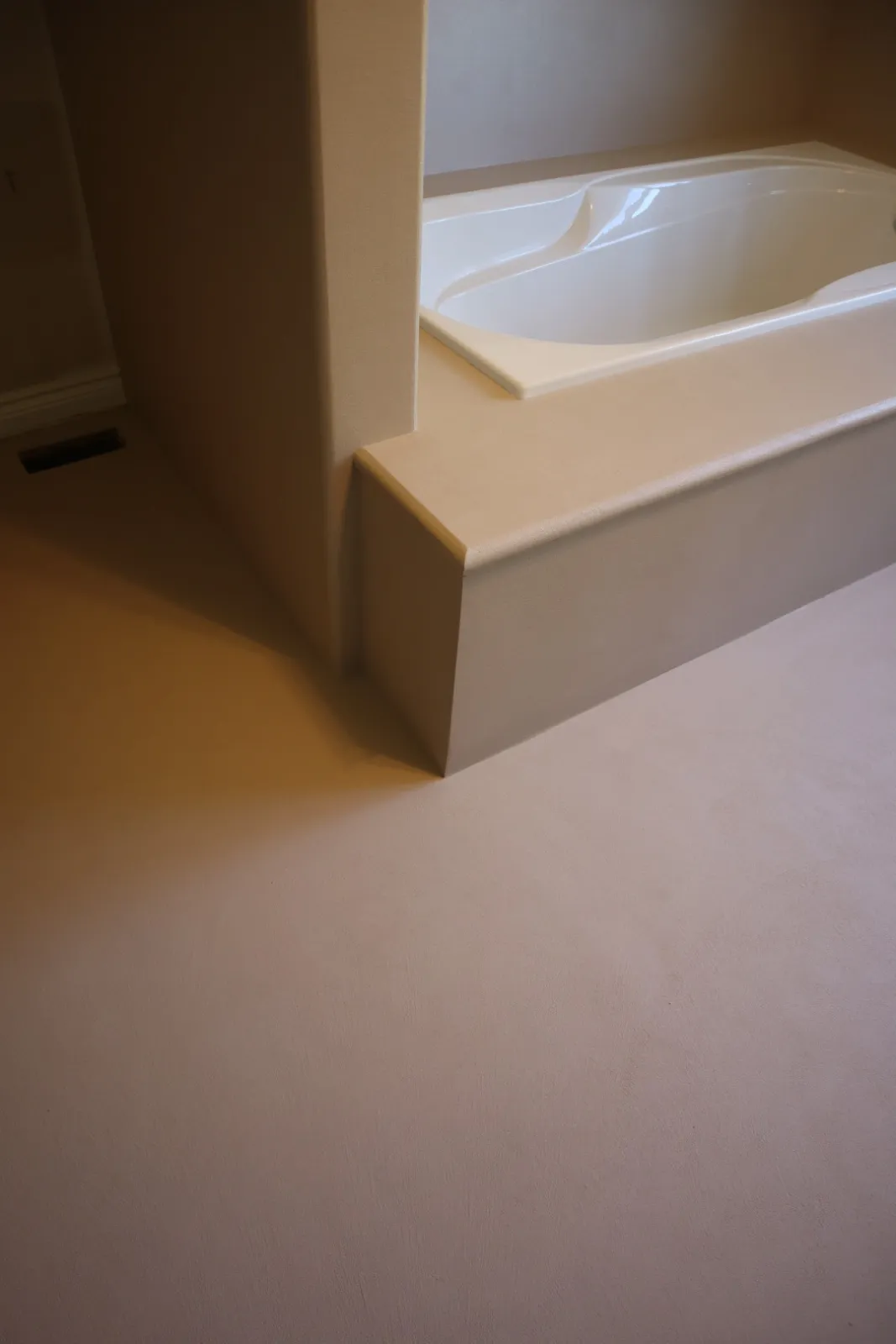
After that it is layering. Thin base coats, sanding, then finer finishing coats troweled by hand. On the tub platform we wrapped the top, edge and front as one continuous surface and hand-formed a rounded nose where the tile bullnose used to be. The band of surround behind the tub was done in the same colour so the whole bathing area reads as one built piece. The finish was then closed with several coats of a sealer made for wet rooms.
What Changed in the Room
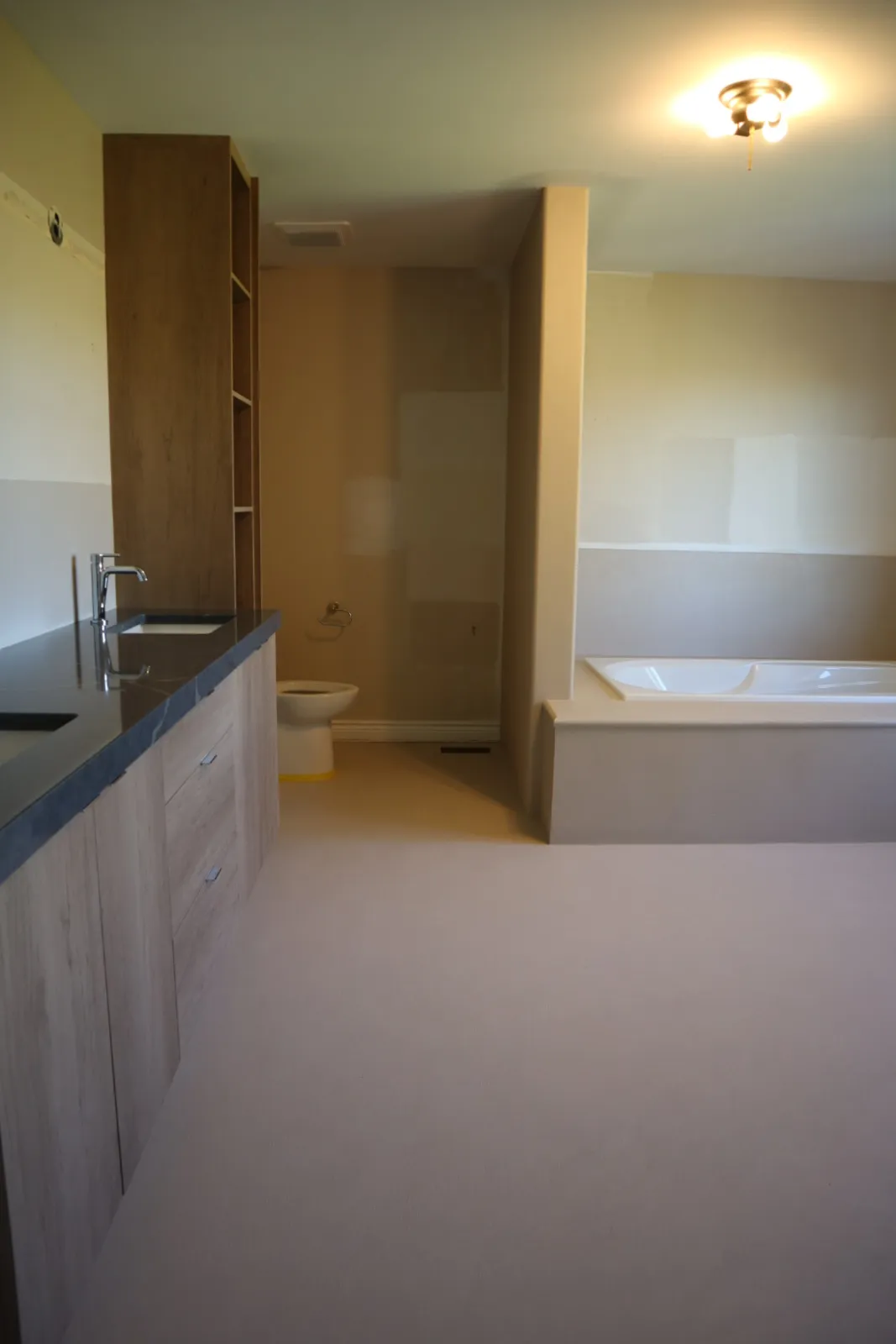
Take the grout grid out of a large bathroom and it suddenly looks bigger. The eye does not stop every twelve inches anymore. The floor, the tub platform and the surround now share one warm greige tone that sits between the pale wood vanity and the near-black stone counter, so the new vanity finally looks like it belongs in the room instead of fighting the floor.
The texture is subtle. From the doorway it is a calm, soft surface. When low light rakes across it you see the trowel movement, which is the difference between hand-applied microcement and a poured or rolled product.
Photos
What We Would Tell You Before You Book It
- It is not a paint job. Microcement over tile is a multi-day, multi-coat process with curing time between steps. Plan to be out of the bathroom for the duration.
- Prep decides the result. If someone quotes microcement over tile without mentioning grout filling or reinforcement, ask why.
- Colour is mixed, not picked off a fan deck. Bring your vanity top or tile samples to the colour visit and we will match against them.
- Care is simple. pH-neutral cleaner, no bleach, no abrasives, no acidic scale removers.
FAQ
Can you do microcement over tile in a condo bathroom?
Often, yes, and it is one of the best uses for it. No tile demolition means far less noise and debris, which matters with condo quiet hours and elevator bookings. We check the building rules and the existing tile before quoting.
Will the old grout lines show through?
Not when the job is done properly. The joints are filled flush and the base coats are reinforced with mesh before any finishing coats go on.
Can the tub platform and floor really be one continuous surface?
Yes. Microcement is thin and flexible enough in application to wrap edges, so the deck, the edge and the front of the platform can run straight into the floor with no trim piece or joint.
Is it cheaper than retiling?
It depends on the room. You skip demolition, disposal and tile setting, and you usually keep the tub, but microcement is skilled hand labour. We price every bathroom after seeing it, so the number reflects your actual tile and layout.
Thinking About Your Own Bathroom in Toronto or the GTA?
Send a few photos of the floor and tub to Info@designerwallfinishes.com or call 647-450-1512. We will tell you whether your tile is a good candidate and bring colour samples to the visit.